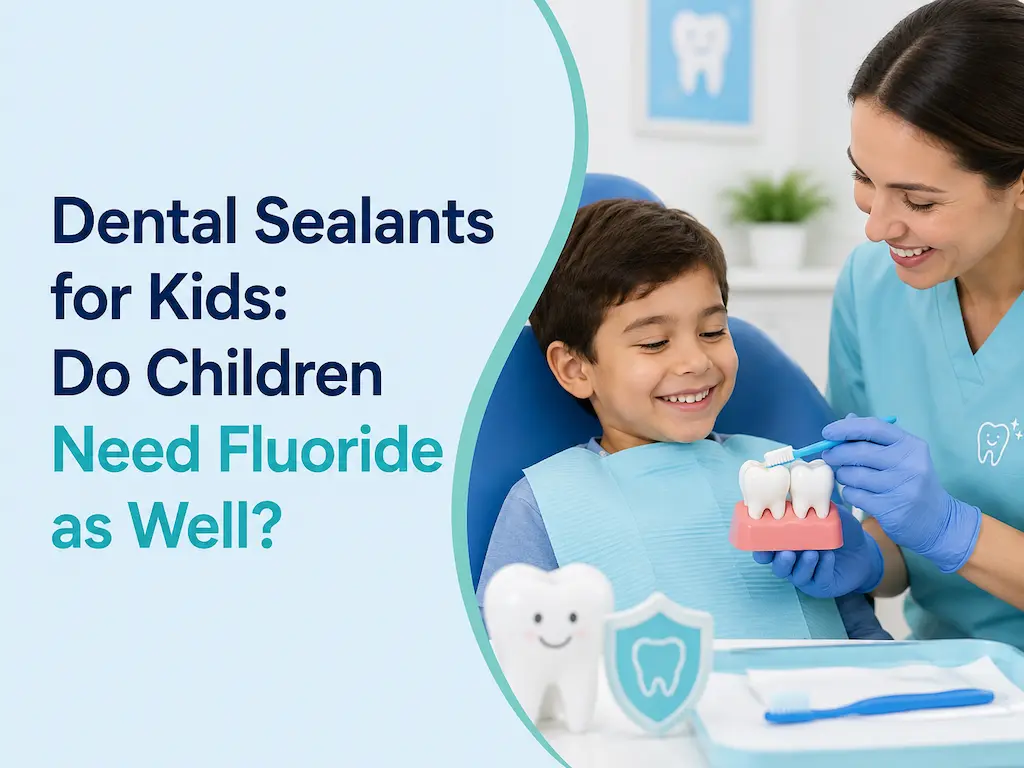
Dental Sealants for Kids: Do Children Need Fluoride as Well?
If your child’s dentist recommends sealants and fluoride during the same visit, you may wonder whether the two treatments duplicate each other. They do not. Dental sealants for kids cover cavity-prone grooves in back teeth, while fluoride helps strengthen a wider range of tooth surfaces. Many children benefit from both, but the right plan depends on their teeth, habits, and cavity history.
What Do Dental Sealants for Kids Protect?
Dental sealants are thin coatings placed over the chewing surfaces of back teeth. These teeth have narrow grooves that can hold food even when a child brushes carefully. Sealants cover those hiding places and make the surface easier to clean.
According to the CDC’s sealant guidance, sealants can prevent 80% of cavities in back teeth for two years. They are commonly placed when permanent back teeth appear, around ages six and twelve. Parents can learn more about protective tooth coatings before deciding
How Are Sealants Applied?
The dentist cleans and dries the tooth, prepares its surface, paints on the coating, and hardens it with a special light. The process is quick and normally requires no shots or drilling. Keeping the tooth dry during placement helps the sealant attach properly.
How Does Fluoride Add Protection?
A pediatric fluoride treatment is a concentrated coating painted across the teeth. It helps the outer tooth layer resist the everyday damage caused by germs, frequent snacking, and sugary drinks. Unlike sealants, fluoride is not limited to the grooves of back teeth.
Dr. Parsi helps parents understand whether fluoride adds useful protection based on their child’s age, past cavities, brushing habits, diet, and other fluoride sources.
Where Do Sealants and Fluoride Differ?
| Question | Dental sealants | Fluoride treatment |
| Where does it work? | Grooves of back teeth | Many exposed tooth surfaces |
| What does it do? | Blocks food and germs | Helps teeth resist early damage |
| How long does it help? | Often several years | Repeated based on cavity risk |
| Does it replace brushing? | No | No |
| Can children receive both? | Yes | Yes |
Sealants do not protect between teeth or along the front and sides. Fluoride offers broader support, but it cannot physically close deep grooves where a toothbrush may not reach.
Does Your Child Need Both?
The answer depends on risk, not simply age. A dentist looks for previous cavities, deep grooves, new back teeth, weak brushing, frequent sugary snacks, braces, dry mouth, and areas that are difficult to clean. Dr. Parsi uses these details to explain whether one treatment or both make sense for a child.
Example: Newly Arrived Back Teeth
A six-year-old with deep grooves in new back teeth may benefit from sealants on those teeth. Fluoride may still help protect the other surfaces that remain uncovered.
Example: Frequent Cavities
A preschooler who has already had cavities may need fluoride, closer home-care support, and more frequent checks. Sealants may also help if the baby molars have deep grooves.
What About Baby Teeth?
Baby tooth decay prevention matters because these teeth help children eat, speak, and save room for adult teeth. Sealants are used most often on permanent back teeth, but they may help certain baby molars with deep grooves.
Fluoride can be considered earlier because it can be painted on after teeth appear. During preventive dental visits, the dentist can judge whether added protection is useful rather than applying the same plan to every child.
What Happens After Treatment?
Children can usually return to school and normal activities immediately after sealants. The dentist will give product-specific directions after fluoride because eating and brushing instructions can vary.
Sealants should be checked during routine visits. If one becomes thin, chipped, or loose, it can often be repaired or replaced. Regular professional cleaning for kids also helps the dentist monitor protected teeth.
How Can Home Care Prevent Cavities?
Professional treatments support good habits but cannot replace them. For stronger cavity prevention for kids:
- Brush twice daily with the amount of fluoride toothpaste recommended for your child’s age.
- Help younger children reach every tooth, especially the back ones.
- Floss wherever neighboring teeth touch.
- Limit frequent sugary drinks and sticky snacks.
- Choose water between meals.
- Keep regular dental visits and sealant checks.
If decay develops, early cavity care for children can keep a small problem from becoming more difficult to manage.
Build the Right Cavity-Prevention Plan
Sealants cover vulnerable grooves, while fluoride supports broader tooth protection. Many children benefit from both, but the best schedule should reflect the individual child. Ask which teeth need sealing, how likely cavities are, and what daily changes would make the biggest difference.
Why Choose Wellesley Pediatric & Orthodontic Dentistry?
Wellesley Pediatric & Orthodontic Dentistry helps families build practical cavity-prevention plans around each child’s needs. Dr. Parsi checks tooth grooves, past cavities, fluoride sources, and brushing habits, then explains whether sealants, fluoride, or both may help protect growing smiles while guiding parents on simple home care at every growing stage.
Which Questions Do Parents Ask?
These quick answers address practical concerns that often arise when families compare fluoride and sealants.