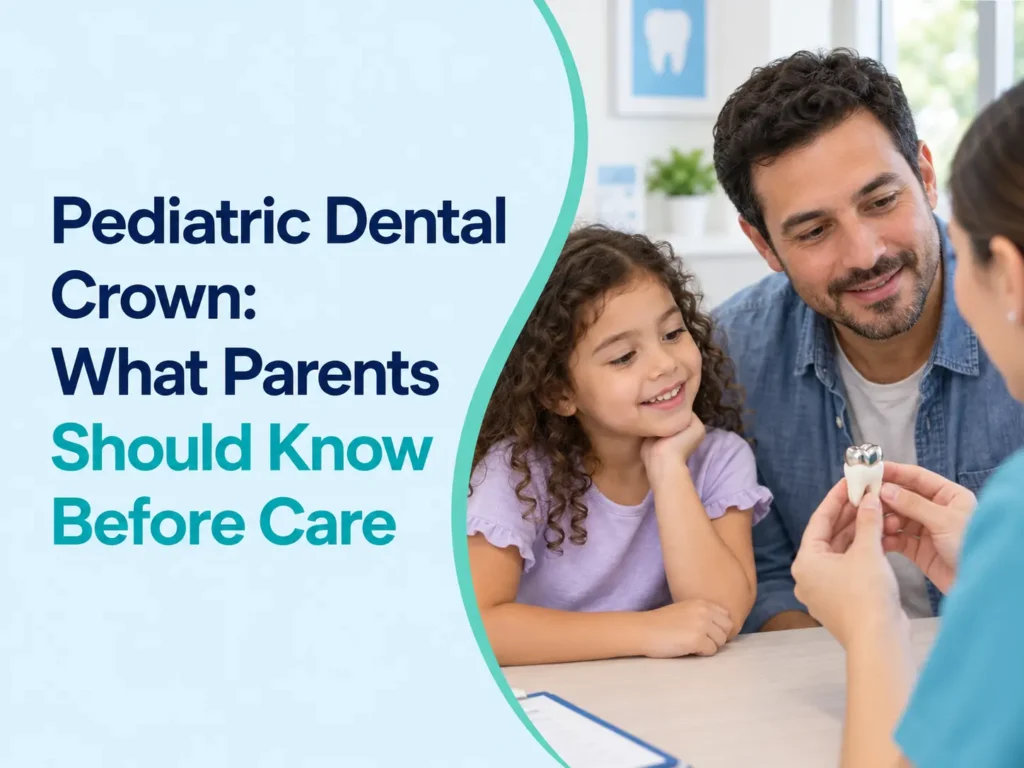
Pediatric Dental Crown: What Parents Should Know Before Care
Hearing that your child needs a crown can raise immediate questions. Is it really necessary for a baby tooth? Will the visit hurt? Is a silver or white crown better? A pediatric dental crown can protect a tooth that is too weak for a dependable filling. Understanding the choices helps you ask better questions and feel prepared before care begins.
What Is a Pediatric Dental Crown?
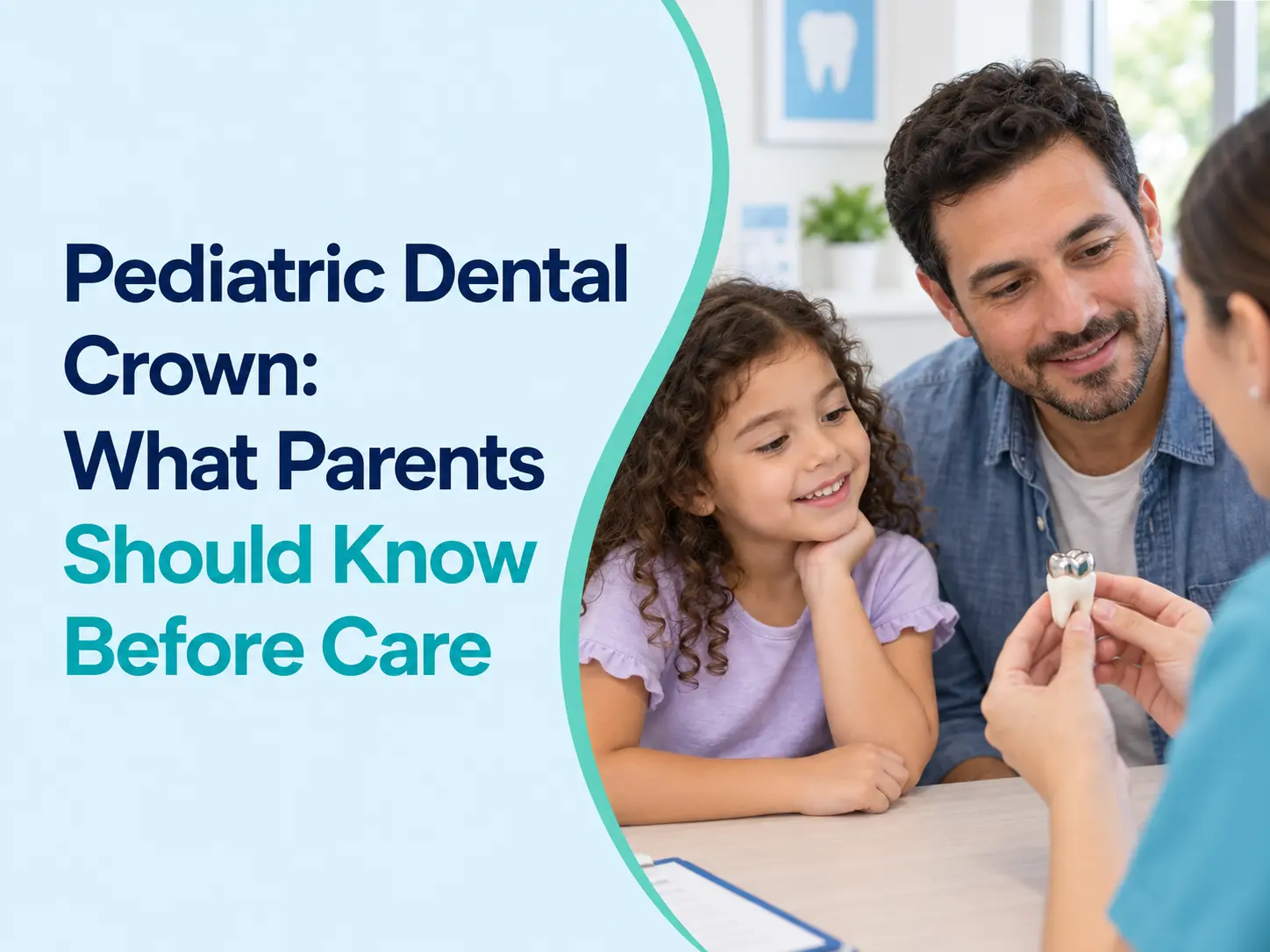
A pediatric dental crown is a small cap that covers the visible part of a damaged tooth. It restores the tooth’s shape, protects the remaining structure, and helps the child chew comfortably. This type of repair is sometimes called pediatric restorative dentistry, which simply means repairing damaged young teeth.
Crown, Filling, or Removal?
The right choice depends on how much strong tooth remains, where the damage is located, and how long the baby tooth should stay in place. A dental exam and, when needed, an X-ray help guide the decision.
When a Filling May Work
A filling can work for a smaller cavity when enough healthy teeth remain around it. Parents can learn about repairing children’s cavities and why the size and location of the damage matter.
When a Crown May Last Better
A crown covers the whole visible tooth, so it may hold up better when several sides are damaged, a large filling could break, or a previous filling has failed.
When Removal May Be Considered
Removal may be discussed when the tooth cannot be repaired safely or is already close to falling out. Dr. Parsi can explain the benefits and limits of each choice for that specific tooth.
Which Child Dental Crown Fits?
Choosing a dental crown for a child tooth usually depends on tooth location, strength, appearance, visit time, and expected cost. No single material is best for every child.
Stainless Steel Crowns for Kids
Stainless steel crowns for kids are strong, pre-made, and commonly used on back baby teeth. Their silver color is noticeable, but placement is often efficient. Parents should mention any known metal sensitivity before choosing this option.
Tooth-Colored Crowns for Children
White crowns blend with nearby teeth and may be preferred for visible areas. They can require more tooth shaping, take longer to place, and cost more. Ask whether insurance treats the white option differently from a standard crown.
The American Academy of Pediatric Dentistry’s guidance supports choosing repairs according to the tooth, the child, and the likelihood that the result will last.
What Happens During Crown Care?
Knowing the order of the visit can make the experience easier to explain to a child. Many pre-made baby tooth crowns can be completed in one appointment, while a custom crown may take longer.
Cleaning and Fitting the Crown
The damaged area is cleaned away, and the tooth is shaped so the crown can fit. The dentist secures the crown and checks that the child’s bite feels balanced.
What Should Parents Expect Afterward?
Follow the dentist’s eating instructions and watch that your child does not bite a numb lip or cheek. The crown may initially feel tight or slightly higher than nearby teeth. Mild tenderness should improve. Call the dental office for ongoing pain, facial swelling, fever, trouble chewing, or a loose crown. Use urgent dental help for children when a problem cannot wait.
How Do Baby Tooth Crowns Stay Strong?
Brush the crown and nearby teeth twice daily, and floss where teeth touch. Limit frequent sugary snacks and avoid chewing ice or very sticky candy. Continue recommended checkups. Baby tooth crowns protect repaired teeth, but they do not prevent new cavities, so daily habits remain important.
What Should Parents Ask First?
Ask why a crown is more dependable than a filling, which material fits the tooth, how many visits are expected, and what comfort support may help. Also ask about coverage and what to do if the crown loosens. Dr. Parsi can use the exam findings to guide parents through these choices without treating every cavity the same way.
Make the Crown Decision Confidently
A crown can preserve a damaged baby tooth when a filling may not last. The best decision considers the tooth’s condition, time before it falls out, crown material, child comfort, and home care. Ask for a clear comparison of all reasonable choices before moving forward.
Why Choose Wellesley Pediatric & Orthodontic Dentistry?
Wellesley Pediatric & Orthodontic Dentistry helps families understand why a crown is recommended and what each option involves. The team explains the visit in parent-friendly language, considers each child’s comfort, and provides clear, practical guidance for care afterward, helping parents make informed decisions about protecting their child’s tooth with confidence.
Pediatric Dental Crown FAQs
These common questions address the practical concerns parents often have before agreeing to a crown.