Helping Children Feel Comfortable at the Dentist With Safe Sedation
A dental visit can feel overwhelming when a child fears unfamiliar sounds, struggles to sit still, or needs longer treatment. Parents naturally want to know whether sedation is necessary, what their child will experience, and how safety is handled.
Pediatric sedation dentistry can help some children stay calmer when other support methods are not enough. It does not always mean a child will be fully asleep. This guide explains the options, safety steps, preparation, and recovery.
What Pediatric Sedation Dentistry Means
Pediatric sedation dentistry uses carefully selected calming methods to reduce fear and help a child receive dental care safely. Depending on the option, a child may stay awake, become drowsy, or sleep through treatment.
Sedation and tooth numbing do different jobs. Sedation helps with fear, movement, and awareness. Numbing medicine reduces pain around the tooth. A child may need both during one visit.
When Children Need Extra Dental Support
A pediatric dentist may consider sedation when a child has strong fear, cannot sit safely, has a sensitive gag reflex, or needs several procedures. It may also help very young children and those with sensory, communication, or developmental needs.
Sedation is not automatic for every nervous child. Short visits, simple explanations, breaks, distraction, and a calm introduction may be enough. The best plan starts by understanding the child, not choosing the strongest option.
Which Dental Sedation Options Fit
Laughing Gas For Children
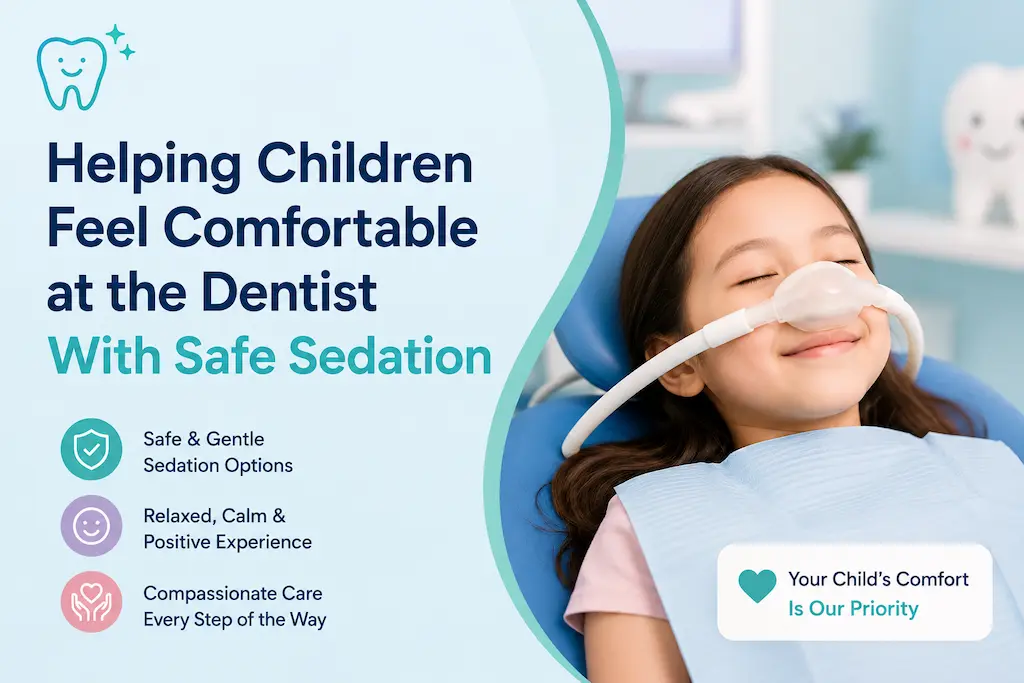
Laughing gas for children is breathed through a small nose mask. The child usually remains awake, can answer questions, and may feel lighter or more relaxed. It works quickly and normally wears off soon after the mask is removed.
Dental laughing gas may suit mild fear, shorter treatments, or children who can breathe comfortably through their nose.
Conscious Sedation For Children
Conscious sedation from a pediatric dentist may involve liquid medicine taken before treatment. The child becomes sleepier and calmer but can often follow simple directions.
Its effects last longer than laughing gas, so parents may need transportation, close supervision, and a quiet day afterward.
Pediatric IV Sedation
Pediatric IV sedation is given through a small tube placed in a vein. It may help with longer care, strong fear, or treatment that cannot be completed safely while the child is fully alert.
The child is watched closely throughout the visit, and the level can be adjusted when needed.
Full Sleep Dental Care
For more involved treatment, a child may be fully asleep. This differs from lighter sedation and requires specially trained providers, proper equipment, and continuous watching while the dentist works.
Laughing gas offers the lightest support. Conscious sedation creates more drowsiness. IV or full sleep care may fit longer or more difficult treatment.
Is Dental Sedation Safe For Kids?
Safe dental sedation for kids starts with careful planning. The dentist reviews the child’s health history, allergies, medicines, age, breathing concerns, recent illness, planned procedure, and expected treatment time.
Parents should report fever, coughing, congestion, or any health change. Food and drink instructions must be followed exactly to reduce avoidable risks.
The American Academy of Pediatrics guidance on dental sedation encourages parents to ask who will give the sedation, who will watch the child, and what training they have.
Questions Parents Should Ask
Ask why the option is recommended, whether your child will be awake, how breathing and heart rate will be watched, what your child may remember, and when normal eating and activity can restart. Also ask which signs require a call after the appointment.
How Parents Prepare Children
Follow the office’s eating, drinking, and medicine instructions exactly. Do not make changes because the appointment is early or your child is hungry. Call the office if your child becomes sick.
Use calm, honest language: “The dentist has a safe way to help your body relax while your tooth is cared for.” Avoid frightening words or promises that your child will feel and remember nothing.
Bring a comfort item if allowed, choose loose clothing, and keep the rest of the day quiet.
What Children Experience After Sedation
The experience depends on the option used. Some children stay awake and talk. Others become sleepy or remember little. Sedation does not guarantee that a child will never cry, move, or feel unsure.
Laughing gas usually fades quickly. Oral conscious sedation and pediatric IV sedation may cause longer sleepiness, poor balance, confusion, or irritability.
Supervise your child closely afterward. Follow instructions about drinks, soft foods, activity, and medicines. Avoid running, climbing, biking, or active play until your child is fully alert. Contact the dental team if recovery is slower than expected or review available emergency dental care when your child needs urgent help.
How Pediatric Dentists Choose
The dentist considers the child’s age, health, fear level, ability to follow directions, treatment length, number of teeth involved, and past experiences. The family’s ability to follow preparation and recovery instructions also matters.
The goal is the lightest suitable support that allows treatment to be completed safely, comfortably, and without unnecessary stress.
Building Positive Dental Visits
Sedation can make needed care more manageable, but parents should understand why it is recommended and which alternatives exist. Ask questions, share your child’s health history, and request written preparation and recovery instructions.
A thoughtful plan can protect comfort, safety, and trust. Following proper brushing and flossing guidance can also help prevent dental problems that may require longer or more involved treatment.
Why Choose Wellesley Pedodontics & Orthodontics?
Wellesley Pedodontics & Orthodontics focuses on age-appropriate communication, careful planning, and personalized comfort for every child. Our team explains sedation choices clearly, reviews each child’s needs, and helps parents prepare with confidence. Schedule a visit to discuss the safest, most suitable approach for your child’s dental care with clarity and compassion.