
Deep Cavity Treatment for Kids: When Fillings Are Not Enough
Hearing that your child’s cavity is too deep for a filling raises questions. Can the tooth be saved? Why is a crown needed? Deep cavity treatment for kids depends on the tooth’s strength, symptoms, and how far the damage has reached. Understanding these factors helps parents decide before pain or swelling develops.
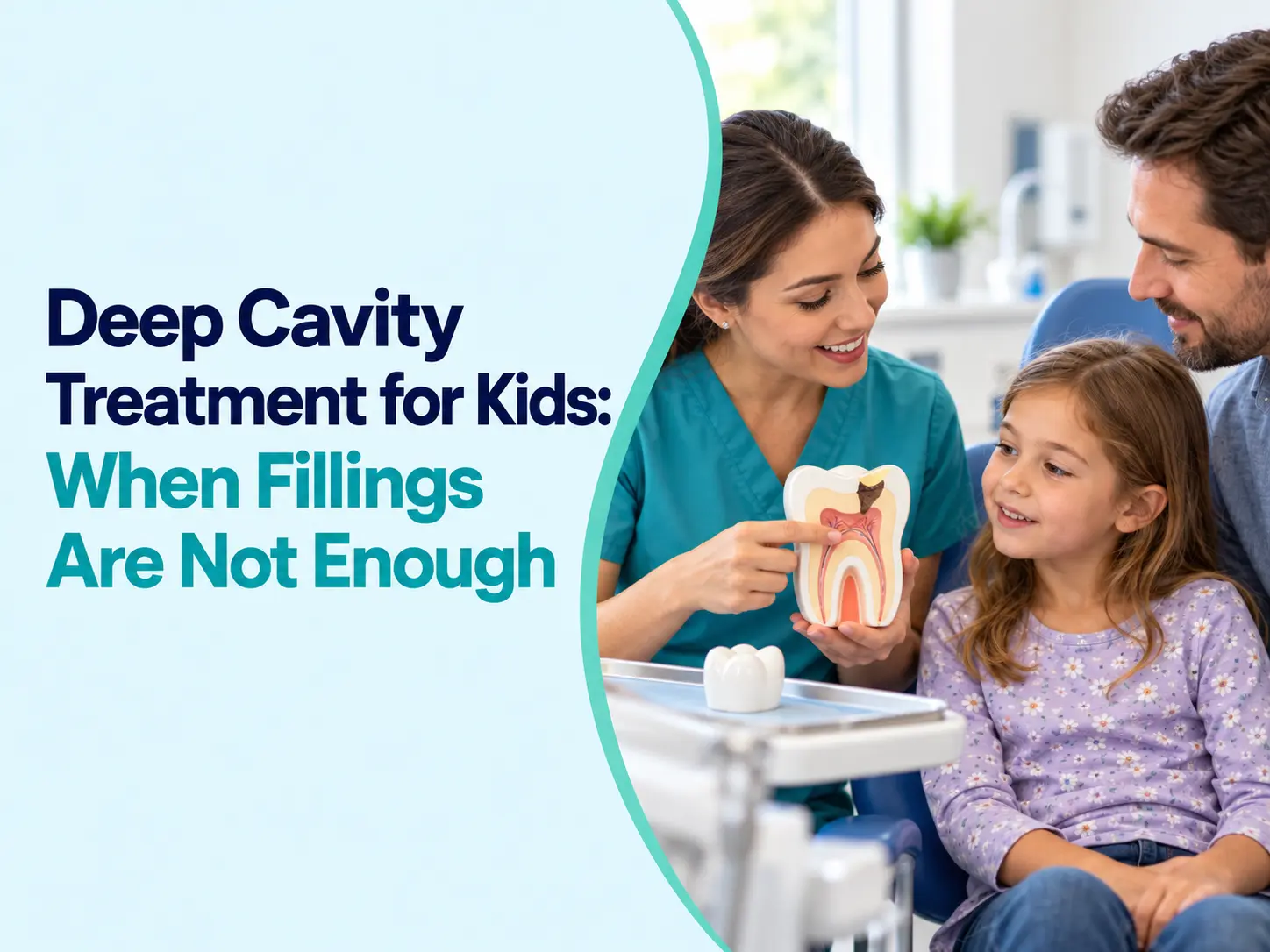
What Makes a Child’s Cavity Deep?
A tooth has outer layers and a sensitive center. A cavity becomes deep as it moves toward that center. The surface opening may look small while damage underneath is wider. Because baby teeth have thinner layers, appearance alone cannot show how serious a deep cavity in a baby tooth is.
How Deep Cavity Treatment for Kids Is Chosen
No single option fits every deep cavity. The dentist considers the exam, X-ray, symptoms, and how long the tooth should remain.
Healthy Tooth Structure
A filling needs firm support. When several sides are weak, a large filling may loosen or crack, while a full covering, a crown, can protect the remaining tooth.
Dental X-Ray Findings
An exam shows visible damage, while digital dental images for children show its hidden depth. The American Academy of Pediatric Dentistry’s children’s cavity care guidance supports considering the tooth, symptoms, and X-ray findings.
Pain and Tooth Timing
Nighttime pain, swelling, a gum bump, chewing pain, and the child’s age can change the plan. Dr. Parsi helps parents compare these factors instead of judging cavity size alone.
Which Deep Cavity Treatment Works Best?
The goal is to stop decay and keep the tooth working when it can be repaired safely. Four approaches may be discussed.
Full Tooth Covering
When a tooth is too weak for a filling but can be saved, a crown covers and strengthens it for chewing. It usually remains until the baby tooth falls out naturally.
Inside-Tooth Treatment
If decay reaches the sensitive center, damaged material may be cleaned from inside before the tooth is sealed and covered. This is often called a baby root canal. Baby tooth-saving care may preserve a tooth with enough healthy structure.
Tooth Removal
Removal may be safer when little strong tooth remains or infection cannot be controlled. After early loss, a spacer may stop nearby teeth from entering the gap. Review tooth removal for children before discussing aftercare.
Painted-On Cavity Control
A painted-on liquid , Silver Diamine Fluoride liquid (SDF), may slow selected cavities when repair must wait. It darkens the damaged area and cannot rebuild a weak tooth, so it is not suitable for every deep cavity.
Crown, Filling, or Tooth Removal?
Compare the main pediatric cavity treatment options below.
| Option | Often Used When | Main Purpose |
| Filling | Damage is limited and strong tooth remains | Replace a small damaged area |
| Crown | The cavity is large or several sides are weak | Cover and strengthen the tooth |
| Inside care plus crown | Damage reaches the sensitive center, but the tooth is repairable | Clean inside and protect outside |
| Removal | The tooth cannot be safely repaired | Stop infection and discomfort |
A one-sided cavity may hold a filling. If several sides are weak, a crown may provide more dependable protection.
Why Save a Decayed Baby Tooth?
Baby teeth support chewing, speech, and room for adult teeth. Early removal can let nearby teeth drift. However, saving a badly damaged tooth is not always safest. The best baby tooth decay treatment considers its strength, infection, location, and natural fall-out time.
What Happens at the Dental Visit?
The exact visit depends on the repair, but most appointments follow a simple sequence.
Exam and X-Ray
The dentist checks the tooth and may take an X-ray. Dr. Parsi can explain the image, remaining tooth strength, and reasonable choices.
Comfort and Repair
The area is numbed before cleaning. Simple explanations, breaks, and suitable comfort options can help. The dentist then completes the agreed repair.
Aftercare at Home
Avoid chewing until numbness fades to prevent cheek or lip bites. Offer softer foods if needed and follow the dentist’s brushing and follow-up instructions.
When Does a Deep Cavity Need Fast Care?
Contact the dentist promptly for nighttime pain, facial swelling, fever with tooth pain, a gum bump, trouble eating, or difficulty opening the mouth. These signs can accompany severe tooth decay in children. A diagnosed cavity should not be ignored simply because it is painless.
Which Questions Should Parents Ask?
Ask what the X-ray shows, whether the tooth can be saved, and why the recommended option is stronger than a filling. Also ask what waiting may cause, how many visits are expected, and which comfort support may help.
How Can You Protect the Treated Tooth?
Brush twice daily with fluoride toothpaste and clean between touching teeth. Limit frequent sugary drinks and snacks. Keep regular visits and consider complete cavity repair for kids if new spots, sensitivity, or food trapping appear. Call if pain, swelling, an uneven bite, or a loose crown develops.
When Should You Act?
A cavity too deep for filling does not automatically require removal. A crown or inside care may preserve it. Arrange an examination before pain or swelling develops, then ask the dentist to explain the X-ray, alternatives, benefits, and likely result of waiting.
Why Choose Wellesley Pediatric & Orthodontic Dentistry?
Wellesley Pediatric & Orthodontic Dentistry helps families understand why a filling, crown, inside treatment, or removal may be recommended. Dr. Parsi reviews the tooth’s condition, explains the available choices in parent-friendly language, and helps children move through care with clear guidance, patience, and support tailored to their needs at every visit.