How to Brush Kids Teeth: Easy Daily Habits for Strong Smiles
Brushing a child’s teeth can feel simple until your toddler clamps their mouth shut, your school-age child rushes, or you wonder whether you are reaching the back teeth. Learning how to brush kids’ teeth correctly makes the routine easier and helps prevent cavities. The basic goal is clear: brush twice a day for two minutes, use the right amount of fluoride toothpaste, and help until your child can clean every tooth well.
Build a Simple Daily Teeth Routine
Create a predictable morning and bedtime routine. The bedtime brush removes food and the sticky layer that forms on teeth before sleep. Keep the order simple, such as pajamas, floss, brush, and story.
Follow the same steps even on busy days. Consistency helps children know what comes next. Parents can also ask for at-home brushing support during dental or orthodontic visits.
Learn How to Brush Kids’ Teeth
Good brushing should be gentle and complete. Focus on a clear view, small movements, and reaching every surface.
Find a Steady Position
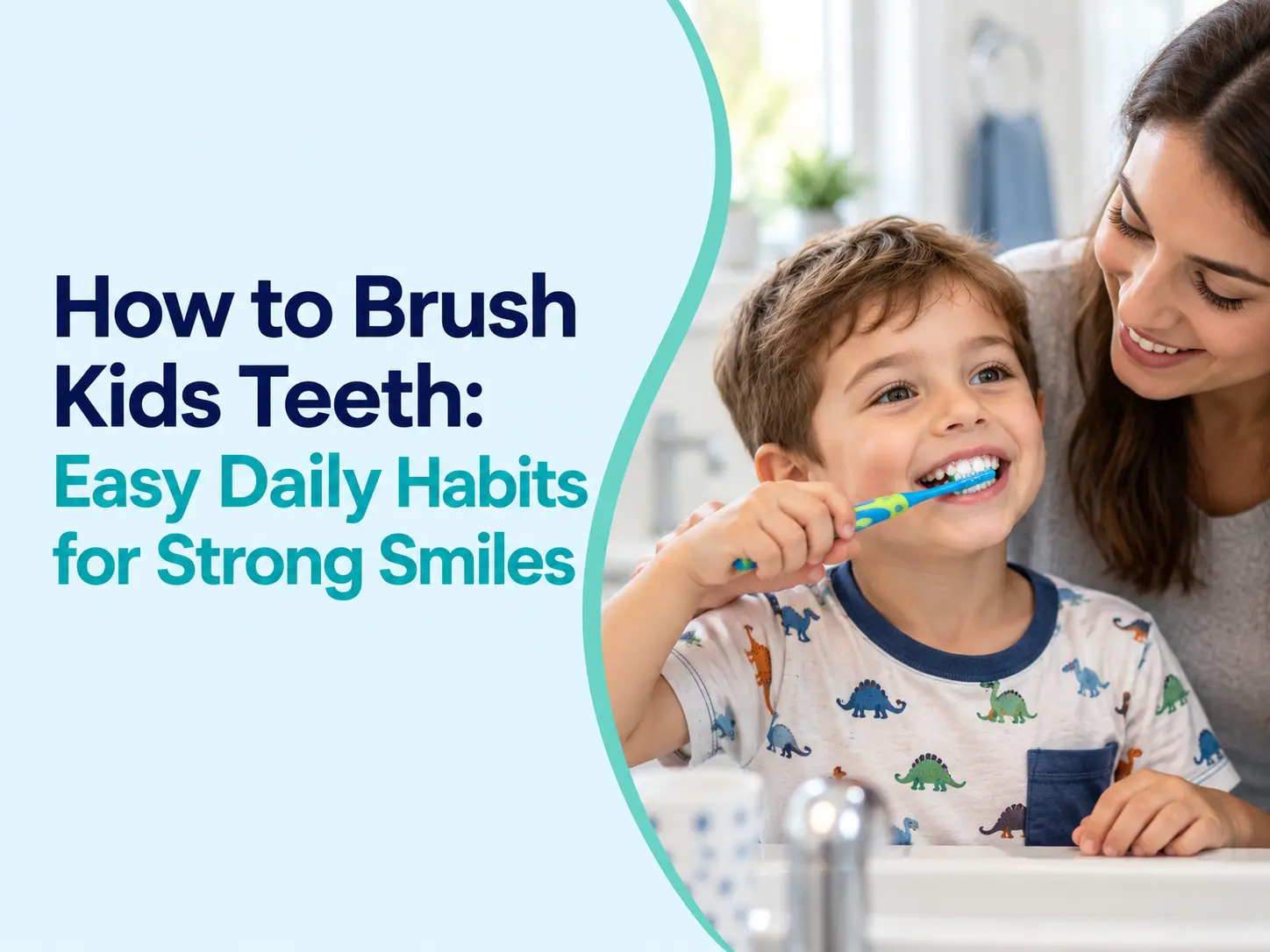
Sit a baby or toddler on your lap with their head against your chest, or place their head in your lap. Stand behind an older child near a mirror. Lift the lips gently so you can see the teeth near the gums.
Clean Every Tooth Surface
Point the brush slightly toward the gums and use gentle circles. Clean the outside, inside, and chewing surface of each tooth. Pay attention behind the front teeth and on the back teeth. Finish by brushing the tongue gently.
Divide the mouth into four parts and spend about 30 seconds on each. The American Dental Association’s home-care guidance recommends brushing twice daily for two minutes with fluoride toothpaste.
Finish the Right Way
Ask your child to spit out extra toothpaste without a large water rinse. Rinse the toothbrush and store it upright to air-dry.
Choose the Right Brush and Toothpaste
Choose products that fit your child’s mouth and feel comfortable. Price does not replace good technique or parent help.
Compare Manual and Electric Brushes
A manual brush is affordable and easy to control. An electric brush may help children who rush or struggle with small movements, and some include timers. For either type, choose soft bristles and a small head.
Find the Best Toothpaste for Kids
The best toothpaste for kids contains fluoride and has an acceptable flavor. Use a rice-sized smear under age three and a pea-sized amount from age three. An adult should add the toothpaste and store the tube safely.
Match Brushing to Your Child’s Age
Children need practice, but an adult must still make sure every tooth is clean.
Help Babies and Toddlers
Begin when the first tooth appears. Let your child take a short turn, but complete the cleaning yourself. This builds comfort without giving small hands the full job.
Guide School-Age Children
Let your child brush first, then check the inside and back teeth. Many need help until around age seven or eight. Dr. Parsi can point out missed areas during routine smile checkups and guide parents on suitable help.
Make Toddler Brushing Easier
Useful toddler brushing teeth tips start with limited choices. Ask, “Blue brush or green brush?” rather than whether they want to brush. Use a two-minute song, timer, sticker chart, or favorite toy.
If your child dislikes the feeling, try a smaller brush or milder flavor. Let them go first, then say, “Now it is my turn to check.” Dr. Parsi helps parents adjust routines for children who need more time, reassurance, or sensory-aware dental support.
Start Flossing When Teeth Touch
A toothbrush cannot clean between touching teeth. This pediatric flossing guide begins when any two teeth touch, using string floss or child-sized floss picks.
Slide the floss gently between the teeth. Curve it around one tooth, move it up and down, then clean the neighboring tooth. Floss once daily, before or after brushing. Professional children’s cleanings can reveal areas missed at home.
Fix Common Kids’ Brushing Mistakes
Common problems include rushing, pressing too hard, using too much toothpaste, and cleaning only the front teeth. Children also commonly miss inside surfaces and new back teeth.
Let children practice, but have a parent finish or check. Replace the brush every three to four months or when bristles bend. Brushing, flossing, and extra cavity protection work together.
Know When Teeth Need Help
Ask a dentist for guidance about tooth pain, swelling, dark or white spots, ongoing bleeding, or lasting bad breath. A visit can also help when brushing remains difficult after changing the position, brush, flavor, and routine.
Build Child Oral Hygiene Habits
Brush twice daily for two minutes, floss touching teeth once a day, use the right amount of fluoride toothpaste, and check your child’s work. Begin with one improvement tonight and repeat it until it becomes a dependable family habit.
Why Choose Wellesley Pediatric & Orthodontic Dentistry?
Wellesley Pediatric & Orthodontic Dentistry helps families turn brushing advice into routines that fit each child. Dr. Parsi guides parents on age-appropriate tools, missed areas, and everyday challenges while helping children build confidence. Families receive practical support during regular visits, making healthy daily home care easier to understand and maintain.